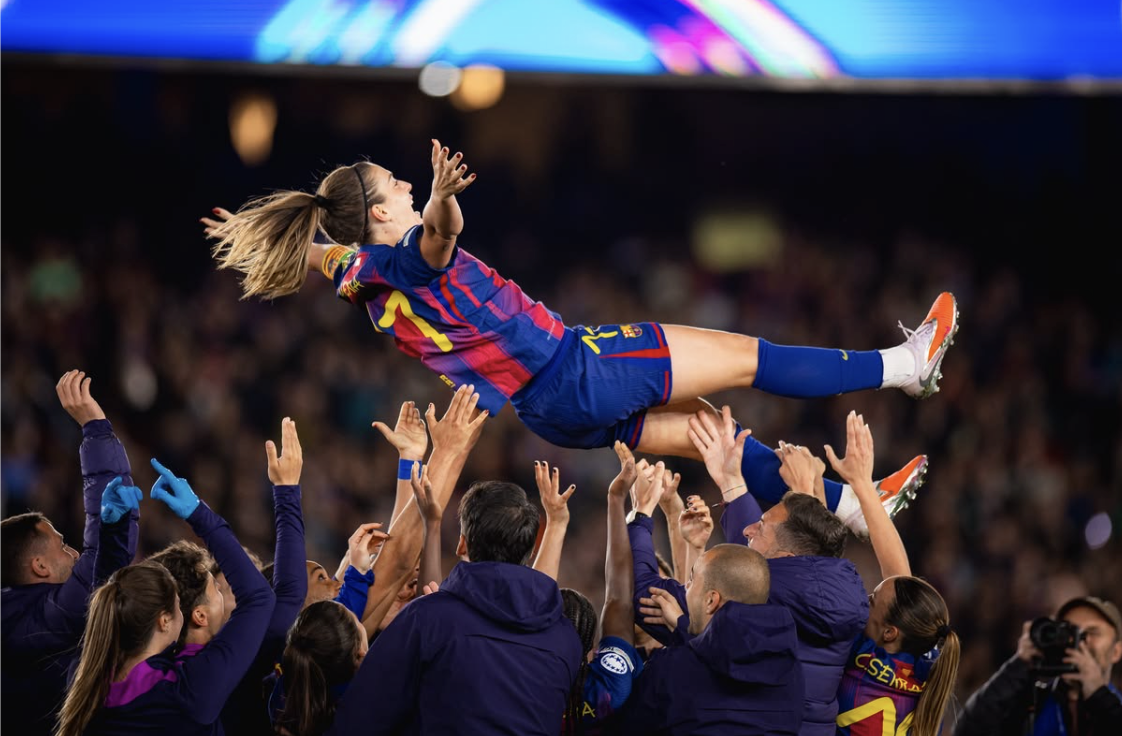

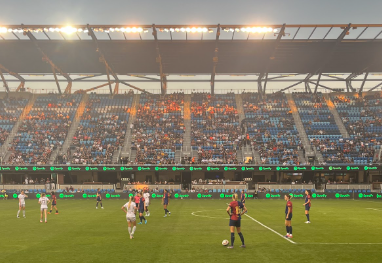

May 24, 2025: Barcelona didn’t look like the title-defending machine that everybody had expected. Against Arsenal in the Champions League final in Lisbon, the Spanish side struggled to find rhythm, their passes just a beat slower, their usual sharpness dulled by the intensity of their opponents and the weight of expectation. Arsenal, undeterred, matched them step for step, holding their own and forcing Barcelona into riskier plays as the minutes ticked by.
Then, at the 74th minute, Arsenal found the decisive moment. Substitute Beth Mead danced into space down the right side of the pitch and slipped a low, precise pass into the box. Stinson Backstenius, darting between defenders, met it with a clean strike that skidded past the outstretched fingertips of the Barça goalkeeper and nestled into the net. For a heartbeat, silence hung over the Estádio José Alvalade. Then the Arsenal bench erupted, fans leapt to their feet, and Barcelona’s players stood motionless, the familiar script rewritten in an instant. Finals are decided in moments like these, but seasons are defined by how teams respond to them.
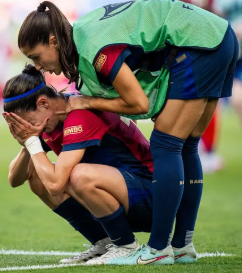
Losing does not erase winning — it redefines it. For FC Barcelona Femeni, falling short of what seemed like a routine third consecutive Champions League title after years of dominance at the top of European football has reshaped the season ahead, turning their confidence into hunger. The disappointment lingers, not as doubt, but as belief sharpened by loss, a reminder of both what the team had achieved and what is expected of it. In a culture where excellence is the standard rather than the exception, anything less than the top becomes impossible to ignore. That pressure is not unique to professional football, echoing even at high school level, where teams learn that once the standard is set, the journey back becomes just as urgent as reaching it the first time.
That pressure does not exist in isolation at FC Barcelona; it is built into the club’s identity, shaped by years of dominance and an expectation that winning is not celebrated as an achievement, but assumed as responsibility.

At FC Barcelona, success is not treated as a moment but as a baseline. The club’s culture is built on the expectation that dominance must be sustained, not celebrated, creating an environment where every season begins with something to defend. This mindset extends beyond results, shaping how players train, compete, and carry themselves on and off the pitch. Players often speak less about trophies and more about responsibility to honor the crest, the style of play, and the generations before them who built up the standard. As Caroline Graham Hansen, Barcelona’s Norwegian winger, said in an interview with Grant Wahl for Substack, “They always want to come closer to that perfect moment of a game or a training or a shot or a goal. And that’s why you work. You try to develop as a person, as a team, and as a player.” That philosophy demands discipline in training, composure under pressure, and a belief that excellence is repeatable, not accidental.
This expectation is rooted in a phrase that has long defined FC Barcelona’s identity: Més que un club — “more than a club” — a belief that extends far beyond a marketing slogan. It’s a declaration that the team, and club, represents something larger than the game itself. This phrase emerged during a time when Catalan identity was suppressed under Francisco Franco’s dictatorship, and the club became a quiet symbol of regional pride and resistance. Supporting Barcelona was not just about football; it was a way to preserve language, culture, and identity when one expression was restricted. With that history comes a different kind of pressure, not just to win, but to represent. The legacy still lingers in the stadium and in the locker room. When players wear the crest, they inherit more than tactical expectations, they inherit history. As club president Joan Laporta has stated across many interviews, “Barça is a symbol of our country and our culture.”
In a culture built on identity as much as trophies, losing does not feel like a simple defeat. It feels like falling short of something larger. After years of dominance in Europe, the disappointment of losing the Champions League final carried more than competitive frustration; it carried the sting of unmet expectation. According to ESPN, captain Alexia Putellas told reporters, “The message to fans is this hurts a lot because of all the work we have put in all year, but above all for them — they did not deserve a final like this. But tomorrow we pick ourselves up and we try again.”
They didn’t have long to dwell on the Champions League defeat, as less than two weeks later, Barcelona faced another high-stakes match in the 2025 Copa de la Reina final.
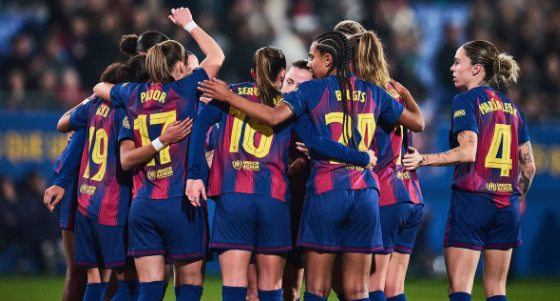
With the sting of Lisbon still fresh, the team regrouped to deliver a decisive 2-0 victory over Atlético Madrid, a reminder that resilience and culture can translate into success even after disappointment. Barça didn’t let the disappointment linger; instead, it became a driving force for the squad. In the days that followed, training sessions were sharper, more focused, every drill and exercise charged with urgency. The players leaned on each other, turning shared frustration into collective determination to leave nothing to chance in the Copa de la Reina final.
Hansen has spoken about Barcelona’s team mentality to Grant Wahl for Substack, noting, “When everybody has the same mentality, you also have a bigger chance of having success and reaching your goals in the end.”
The lessons of their mindset and teamwork didn’t stay in the locker room, the effects of Barcelona’s resilience were felt far beyond the team itself.
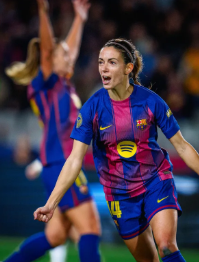
The sting of the Champions League final extended far beyond Barcelona. Fans around the world felt the disappointment, and young players everywhere watched as a team defined by excellence and resilience confronted a setback with determination. The emotional weight of the loss, combined with the team’s response, showed how women’s football can inspire, teach, and connect communities far beyond the pitch, or as Americans call it the field. As midfielder Aitana Bonmatí told TV3, “But this is football. This will serve us to come back stronger next year,” highlighting that even in defeat, lessons are learned and motivation is renewed. The impact of Barça’s journey that season served as a reminder that football is not just about trophies, it’s about culture, identity, and the example set for others striving to reach their goals.
The emotional impact of falling short of a goal is something any team can relate to, from elite athletes to high school players. Just as Barcelona felt the weight of expectations and the sting of defeat, teams at every level knew the challenge of bouncing back after a tough loss. Watching Barça confront disappointment with focus and determination can inspire younger players to see setbacks not as failures, but as opportunities to grow, train harder, and support one another. Here at Casa, players echo a similar mentality: each loss is a lesson, each win a milestone, and the team’s collective effort defines their progress as much as the scoreboard.
Just as FC Barcelona Femeni turned disappointment into motivation, that same mindset is reflected on a smaller scale at Casa, where players and coaches view setbacks not as failures, but as opportunities to reset, refocus, and improve. Rylee Larson, a sophomore, emphasized this mindset explaining how “after a tough loss, the team responds with a clean mindset and a drive to have a good practice [in order to be] ready for the next game.”
This is just a sneak-peak into a broader team mentality, one that prioritizes growth in the moments immediately following defeat. For players, the impact of losing extends beyond a single game, becoming a source of motivation moving forward. Larson added, losing “gives you incentive to try and be better next game so that you don’t feel that feeling again,” reinforcing the idea that setbacks can fuel improvement rather than discourage it.

That same perspective is reinforced at the leadership level. Coach Vinnie Cortezzo echos this focus on process over outcome, reminding players after a tough lost “that some results are out of [their] control and that [they] should focus on [their] preparation, effort and performance.” By shifting the emphasis away from the result and toward consistency and discipline, the team builds a foundation for long-term success.
This approach is not just theoretical, it has transited into real results. Correzzo recalls a season in which early setbacks pushed the team to “double down on effort, commitment, and desire,” sparking a turnaround that led to a dominant run through the rest of the season.
At Casa, as with Barcelona, the response to failure ultimately defines success, showing that resilience and mindset matter just as much as the result on the scoreboard.
This shared mentality across levels highlights a universal truth within the sport, that growth is shaped not just by victory, but by how teams respond when things don’t go as planned.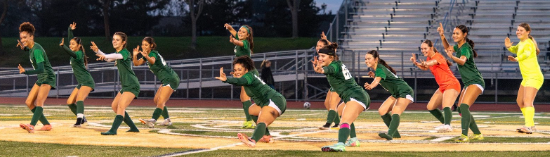
With lessons from past victories and setbacks in mind, Barcelona now turns its focus to the season ahead, ready to build on experience, culture and resilience. Lessons that resonate far beyond the pitch.
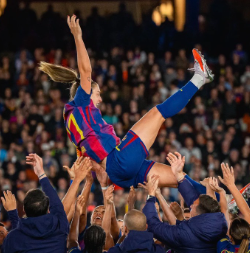 The heartbreak, the triumph, and everything in between have set the stage for the next chapter, both for Barcelona and anyone striving to turn setbacks into comebacks. As the team looks toward defending domestic titles and reclaiming European glory, every training session and match becomes an opportunity to reinforce the lessons learned from last season. The club’s culture of resilience, discipline, and collective mentality ensures that each player approached the season with focus, knowing that past setbacks are stepping stones rather than obstacles. At Casa, the same principles apply: our players understand that growth comes from both victories and defeats, and that teamwork, perseverance, and dedication define success just as much as trophies. With this mindset, the season ahead promises not only new challenges, but also the chance to see lessons in action, on and off the pitch.