
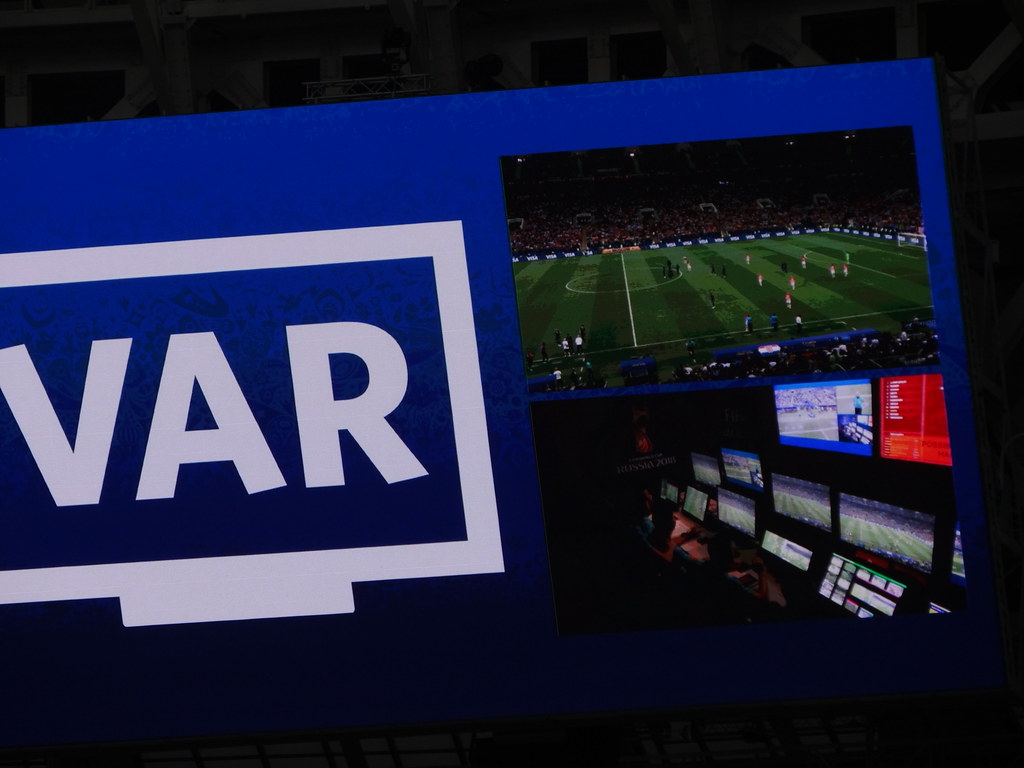
Use of VAR, or Video Assistant Referee, has been a very controversial topic in soccer; it seems that nobody can really decide if VAR has done more bad than good. Recently, more people than ever have been leaning towards the perspective that VAR has done more bad than good.
VAR is the system that helps come to a conclusion on a hard decision in soccer. VAR was first introduced in 2016, but it didn’t gain as much traction until 2018, during the time when the World Cup taking place in Russia. VAR was added to soccer to make it more fair, to help make good decisions, and/or to fix a bad decision made by the on-field referee. For the last five years, there have been many mixed opinions on how much VAR is impacting the game.
In the last five years, the KMI, or Key Match Incidents, has reported over 120 wrong decisions made by VAR in the Premier League alone. Also in the same few years, over 1,200 right decisions have been made by VAR in the Premier League. So do the wrong decisions outweigh the right decisions, or is it the other way around?
At first, when VAR was introduced to the Premier League in the 2019-20 season, people were excited to see a piece of technology help affiliate the game that they love. But as time went on, more and more people started to dislike it more and more. Season after season, there were more and more controversial decisions that affected the viewing experience and final result for a team. With every season having a confirmed total number of wrongful VAR errors, including; 2022-2023 with 38 wrong decisions, 2023-2024 with 31 wrong decisions, 2024-2025 with 18 wrong decisions, and 2025-2026 with 23 wrong decisions.
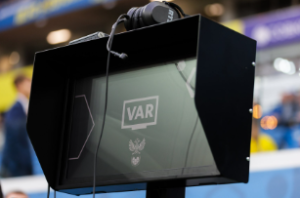
Even with all of the negative things about VAR, there are positives that VAR brings to the world of soccer. VAR brings a more fair playing environment for all sides: teams, fans, and players. Some of the biggest decisions in the Premier League have been decided with VAR, with almost all of these calls being the right decision. An example of a good decision with VAR took place in Matchweek 36 (two more game weeks until the end of the 25/26 Premier League season), with West Ham United and Arsenal facing off at the “London Stadium.” Arsenal were tied on points with Manchester City, a must-win game for Arsenal. On West Ham’s side, they also need to get something out of this game with them fighting a hard fight with Tottenham Hotspur in the relegation battle.
The first 80 minutes of the game were not special at all with the score being 0-0, and both sides needing something out of this game. Arsenal finally found a break-through with Leandro Trossard in the 83’ minute. While in stoppage time, in the 90+6’ minute, West Ham found an equaliser through Callum Wilson after a corner was taken. This is where VAR came into play; immediately after the play, the Arsenal players surrounded the referee and told the referee that Arsenal’s goalkeeper, David Raya, had his arm held down by a West Ham player as the corner was whipped in. After a lengthy VAR check, the on-field referee gave a free-kick to Arsenal in their box and to keep the score as 1-0. The game eventually ended as a 1-0 win for Arsenal and a crucial win in the title race.
As for a bad example, there are over 20 to choose from this season alone in the Premier League. One of the most controversial calls was during Matchweek 28 in the Premier League with Manchester United facing off against Crystal Palace at “Old Trafford.” Crystal Palace were up 1-0 until the 55’ minute after Maxence Lacroix was sent off by a red card for an “obvious goalscoring opportunity.” Originally, the on-field referee gave a penalty and nothing else. Then, VAR came into the picture and took a closer look at the play. The replay shows a through ball pass from Bruno Fernandes into the path of Matheus Cunha. Before Cunha could get to the ball, Lacroix put his hand on Cunha’s shoulder. After about a second of hesitation from Matheus Cunha, he putshis arms up and fell to the ground inside the box. VAR in the end confirms a “denial of a goal scoring opportunity,” and sent Maxence Lacroix off. Manchester United scored the penalty and completed the come-back, to win the game 2-1.
VAR’s good and bad decisions are very inconsistent. Many fans all around the world support the idea of removing VAR and playing a more natural and exciting game without over analyzing every some-what controversial play. In the end, VAR has done a lot more bad rather than good for the game and should be removed to have a more free-flowing game in the future of the sport.