

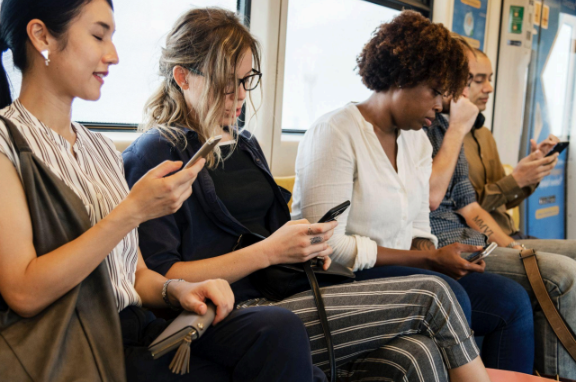
Throughout the decades, iPhones have become an integral part of everyday life. Paper maps have turned into Apple Maps. Calling on iPhones has succeeded landlines. Card and board games have been replaced by Block Blast or Subway Surfers. The difference between serious addictions and iPhone addictions have become a blurred line. When asked how much time they could spend without their phones, students at Casa Grande said they could spend about a week without their phone. Ella Rostoni, a sophomore, said she could spend half a year without social media.
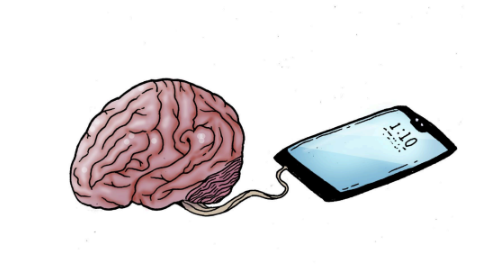
These phenomena have been one of the most influential topics in many debates and conversations. We often complain about how much social media and technology has warped society, yet we know that we are as much obsessed with our phones as the next person. Since getting a phone, Casa students Ella Rostoni, Olivia Fragakis, and Analina Siebert report that they feel as if their attention span has gone down exponentially, as well as their creativity.
The average American spends roughly 4-6 hours per day on their iPhones. Roston says she “spend[s] probably 3 hours every day” on her phone. Curren Muckenfuss, a Casa sophomore, spends “roughly 3-4 hours” on hers. Students like them are often very busy with school, sports, and extracurriculars. Other students who do not participate in many extracurricular activities, such as Addison Kwan, a junior at Saint Vincent’s High School, reports that she spends almost 5 hours on her phone daily.
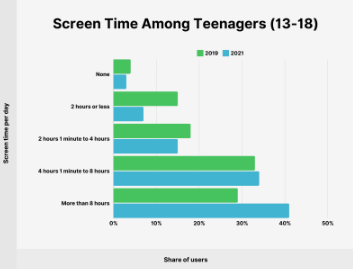
Along with decreased attention span, iPhones also are the causes of severe insecurity, especially in teenagers. Multiple students at Casa Grande stated that they felt social media set an unrealistic expectation for how people look and that it makes them feel bad about themselves.
In order to break out of this cycle of constant phone checking and doom scrolling, I decided to take a hiatus from my phone — a chance for me to be able to think independently without searching, eat without watching, and lay in bed without scrolling. When pondering this idea, I wondered how long I could truly go without my phone. I thought a week would be a good place to start.
On the first day, I noticed how weird it was to not immediately grab my phone when I woke up. My routine would usually consist of waking up, grabbing my phone, and scrolling on Tiktok until I was awake enough to get out of bed. Now, I had nothing to do but get out of bed. I realized, as I finished getting ready, that I was ready to leave almost too early. Without my phone, I hadn’t postponed my morning routine by 20 minutes. On my ride to school, and throughout the day, I often reached for my phone in my back pocket, or went to text one of my friends, before remembering that I wasn’t using it.
My usual night time routine consists of eating dinner while scrolling on my phone or watching Youtube. I couldn’t do either of those things. I had to sit and eat, and be content with my own thoughts. It made me think “how did humans adapt to become so phone obsessed?” People used to eat dinner and actually speak to each other, no phones in sight. They used to read instead of scrolling.
This ties into the saddening statistic of Gen Z being the most illiterate out of all generations so far. Teenagers rely on things like Google or ChatGPT in order to gather information or ask questions. During this week, when I had a question, I had to really think instead of immediately getting an answer with 3 taps on my phone. I felt my attention span increasing and my willingness to learn expanding.
Throughout the days, I reached less and less for my phone, and relied more on the other resources I was given – such as books, context clues, the people around me. I enjoyed the little sounds of birds chirping, the dishwasher humming, the TV playing in the next room – the noises that had instead had been cancelled out with the sounds of Tiktok, Instagram, or music. By the end of the week, I didn’t feel like I wanted my phone back at all. Sure, I missed texting my friends, but I knew that once I got my phone back I’d continue right back into that cycle. This realization kept me wanting to continue researching and experimenting.
Two weeks after my experiment, I did indeed revert to that cycle – TikTok at night and the morning, scrolling instead of doing my homework. But, I have become very aware of it. When I am supposed to be doing homework, and I have it laid out in front of me, I still scroll and scroll. Each scroll, I tell myself “this is the last video,” yet it’s never true. I feel this guilt for being on my phone for so long, yet I don’t retain the ability to stop myself. I imagine this is how many people feel. In order to regain control, the dependence on iPhones needs to lower dramatically. People must begin living in the moment, thinking critically, and using their phones for good, instead of replacing their own brains with them.
If you are one of those people who consider themselves to be phone-dependent, that is the first step. Awareness will lead you to the realization that you do not want your one life to be spent on mindless activity. You will realize that you’d rather spend your time observing and making memories. Sure, your phone is useful for capturing those memories, but you cannot live in them until you don’t rely on your phone to, essentially, keep you alive. People tend to lean on their phone so much because they feel it’s an escape. A way to calm down and reboot. But, while this is a good thing, a simple calming down shouldn’t takenearly half of your day. In fact, your “chill” time might make you more anxious. Studies show (https://www.butler.org/blog/phone-affecting-your-mental-health) that growing a dependency on your iphone causes severe anxiety, lack of interest in activities, and irritability.
So, grab a map instead of asking Siri for directions, pick up a book instead of scrolling on TikTok, and you might find that you feel more connected with yourself, your friends, your family, and the world around you.









Eren Jaeger • Apr 15, 2026 at 2:45 PM
This is super well written and I’m definitely inspired to go without my phone! Phones are a serious addiction that I feel is not taken as serious as it should be.